Lifting Equipment Inspection Services Before Operator Certification
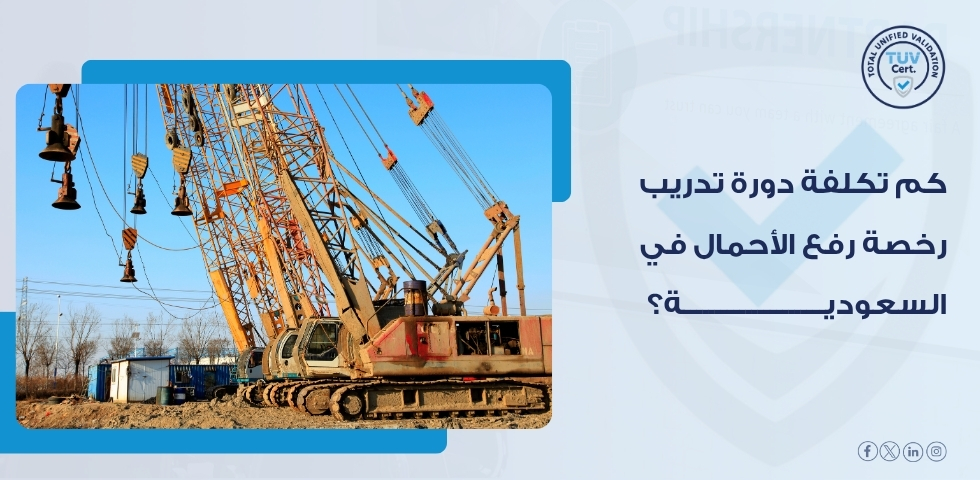
How Much Does a Lifting Equipment Operator Training Course Cost in Saudi Arabia?
The cost of a lifting equipment operator training course in Saudi Arabia depends on several factors, most notably the type of course, its duration, the training provider, and whether the program includes assessment and certification.
It is recommended to choose a specialized provider that offers lifting equipment inspection services alongside training programs related to the inspection of lifting equipment and heavy machinery. This ensures trainees acquire the necessary skills while complying with workplace safety requirements.
Factors Affecting the Cost of a Lifting Equipment Training Course
There is no fixed cost for lifting equipment training courses in Saudi Arabia, as fees vary from one training provider to another based on several factors related to the course content, duration, training format, and additional services offered.
For this reason, comparing courses based solely on price may not accurately reflect the actual value received by trainees or organizations.
Training providers with extensive expertise in lifting equipment inspection services and heavy equipment operations often deliver programs that are more closely aligned with real workplace requirements, helping improve trainees' competencies and strengthen workplace safety culture.
The main factors influencing the cost of a lifting equipment operator training course include:
-
Type of Training Program: Fees vary depending on whether the course is designed for beginners, professional skill development, or certification for operators of specific lifting equipment.
-
Training Duration: Longer programs typically require more theoretical and practical training hours, which may increase the course cost.
-
Level of Practical Training: Programs that include hands-on operation of lifting equipment or realistic workplace simulations require specialized facilities and experienced instructors, which can affect pricing.
-
Instructor Qualifications and Experience: Courses led by instructors with expertise in lifting equipment inspection, safe lifting operations, and heavy equipment handling provide greater practical and technical value.
-
Training Provider Accreditation: Many individuals and organizations prefer training providers that follow recognized professional standards and deliver programs aligned with safety and regulatory requirements.
-
Target Audience: Training costs may differ between courses designed for individuals and customized corporate programs tailored to a company's operational needs and workforce size.
In addition to these factors, some training providers include value-added services such as training materials, practical assessments, technical support, or safety consultations related to lifting operations, all of which may influence the overall course cost.
Total Unified Validation (TUV) is committed to delivering training programs tailored to the needs of various industrial and construction sectors, leveraging its expertise in lifting equipment inspection services and heavy equipment operations.
This integration of technical expertise and professional training enables TUV to provide programs that closely reflect real workplace conditions while emphasizing best safety practices and compliance with industry standards.
Therefore, when evaluating the cost of a lifting equipment operator training course, it is advisable to consider the course content, the training provider's expertise, and how closely the program reflects real operational environments rather than focusing solely on price. Choosing the right training program is a long-term investment in workforce competence and operational safety.
Training Duration and Its Impact on the Cost of Lifting Equipment Courses
When comparing the prices of lifting equipment training courses in Saudi Arabia, training duration is one of the most significant factors affecting cost.
Generally, the longer the training program, the more theoretical knowledge and practical experience participants receive, increasing the overall value of the course.
However, a longer course is not necessarily the better option. The ideal duration depends on the trainee's job responsibilities, required experience level, and learning objectives.
For example, some programs focus on the fundamentals of lifting operations, while others provide comprehensive training on safety procedures, risk management, pre-operation and in-service lifting equipment inspection, as well as practical applications involving different types of heavy equipment. These differences in course content naturally result in variations in both duration and cost.
Training duration is not determined solely by the number of days but also by several other factors, including:
-
Total number of training hours.
-
Balance between practical and theoretical training.
-
Range of topics covered.
-
Inclusion of practical assessments or competency evaluations.
-
Number of participants in each training group.
Many companies also prefer customized on-site training programs for their employees, allowing the course duration to be adapted to their specific operational requirements.
This type of training is often more relevant to real workplace conditions, particularly in industries that rely heavily on lifting operations and the daily use of heavy equipment.
Total Unified Validation (TUV) offers training programs of varying durations to meet the needs of both individuals and organizations, with a strong focus on combining theoretical instruction with practical application.
The company also leverages its expertise in lifting equipment inspection services to provide training content that reflects real-world workplace challenges, helping participants apply safety procedures more effectively.
Therefore, when assessing the cost of a training course, it is recommended to evaluate the number of training hours, the quality of the course content, and its relevance to the trainee's actual job responsibilities rather than comparing prices alone. The program that best matches your operational needs is often the one that delivers the greatest long-term value.