Crane Safety Inspection & Certification | Why It Is Critical Before Operation
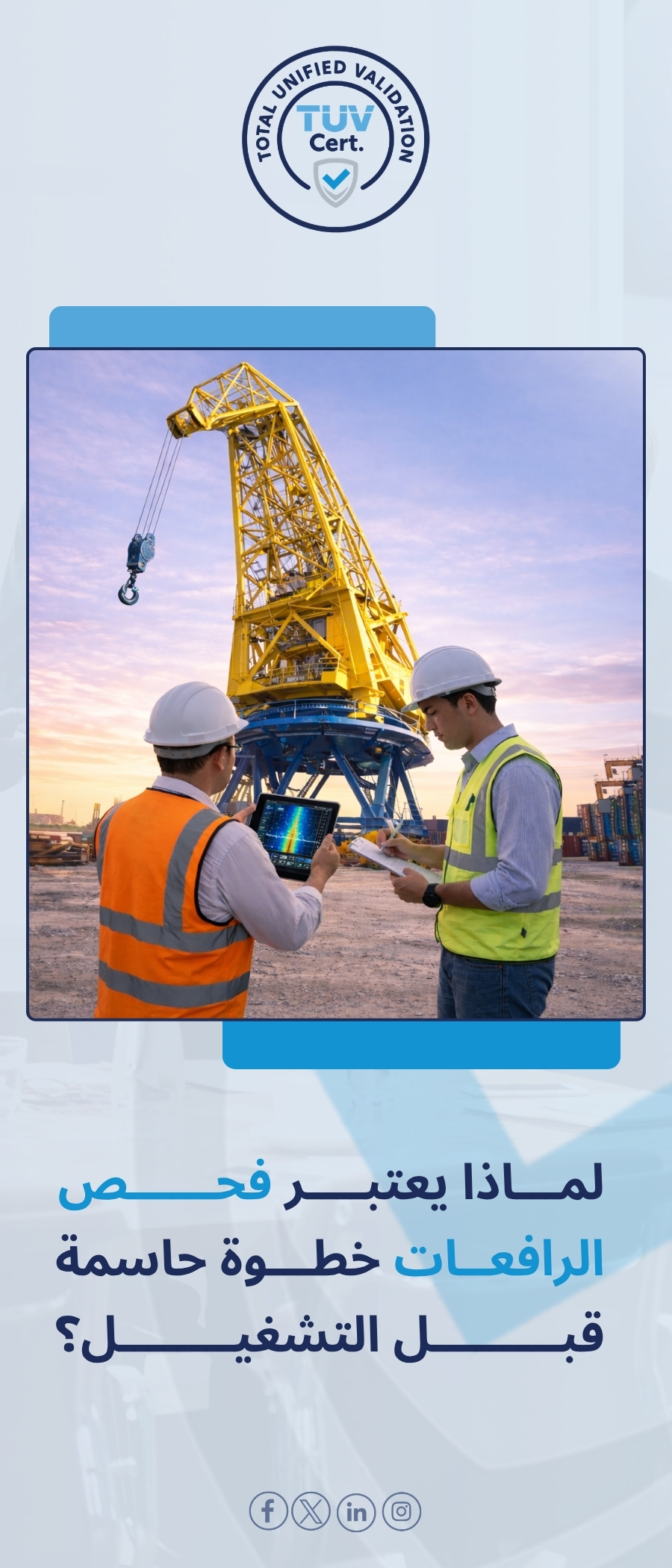
Why is crane inspection a critical step before operation?
HERC crane safety, crane safety inspection, and certification issuance are among the most important steps that every industrial or commercial facility must comply with before operating any crane or heavy lifting equipment in the Kingdom of Saudi Arabia. Ignoring this step may lead to serious accidents affecting worker safety and property, as well as legal penalties and non-compliance with national and international standards. Therefore, crane inspection and issuing accredited certificates from trusted authorities is a strategic step to ensure compliance with HERC and SASO requirements in the Kingdom.
TUV in Saudi Arabia provides an integrated experience in crane safety inspection and certification issuance, combining high technical expertise, international accreditation, and the use of modern digital platforms to facilitate booking and inspection processes. This makes it the ideal choice for companies seeking quality and accuracy in inspection operations. The Saudi crane inspection certificate issued by TUV is an officially recognized document that ensures all inspections are conducted according to the highest safety and quality standards, enhancing trust among clients and investors.
The crane safety inspection and certification process includes a series of detailed steps, starting from inspecting the crane’s main structure, checking the condition of cables and motors, evaluating hydraulic and electrical system performance, and finally issuing the Saudi crane inspection certificate confirming the equipment is safe for operation. Following checklists during this process is an essential part of ensuring no critical step is missed.
TUV’s role is not limited to certification only; it also extends to providing technical consulting on preventive maintenance and training technical teams on applying HERC crane safety standards to ensure safe and sustainable operation of cranes and heavy equipment in industrial and commercial facilities. Compliance with these standards not only enhances safety but also improves operational efficiency and reduces costs resulting from failures and accidents, making crane safety inspection and certification a critical step before operation.
What are the steps of crane safety inspection?
Crane safety inspection and certification is a fundamental and critical step before operating any crane or heavy lifting equipment due to its direct impact on the safety of workers and equipment. TUV in Saudi Arabia provides crane inspection and certification services according to the highest safety standards, ensuring compliance with HERC requirements so that every crane operates safely and efficiently before being put into service.
1. Pre-inspection checklist
- Ensure structural stability and absence of cracks or metal damage.
- Inspect lifting cables for wear or bending.
- Check motors, hydraulic, and electrical systems.
- Verify safety valves, brakes, and protection systems.
- Record all observations accurately for certification issuance.
2. Essential inspection tools & safety requirements
- Load and pressure measuring devices.
- Precision tools for angle and movement checks.
- Personal protective equipment (helmets, safety harnesses, protective shoes).
- Maintenance records and documentation.
3. Detailed inspection procedures by crane type
- Fixed Cranes: Foundation stability and arm alignment.
- Mobile Cranes: Tires, balance systems, and full movement testing.
- Tower Cranes: Upper structure safety, electrical systems, and remote control.
- Forklifts: Lifting systems, tires, and brakes.
4. Illustrative images for each step
Illustrations are used at every stage to ensure accurate implementation of inspection procedures, including checklists, tools, and operational steps.
Following these steps ensures that all crane inspections are certified and reliable and confirms compliance with HERC safety standards in Saudi Arabia. TUV engineers carry out inspections with high expertise, ensuring full adherence to international and local standards.
This process reduces accidents, protects personnel, improves operational efficiency, and ensures legal compliance. At the end of the inspection, an official Saudi crane inspection certificate is issued, verifying compliance with safety standards and enhancing the facility’s credibility.
Crane certification issuance: compliance and legal approval steps
After completing crane safety inspection, certification issuance confirms that all equipment meets safety standards in Saudi Arabia. TUV plays a key role as an accredited authority providing accurate and reliable certification services aligned with HERC standards.
1. Certification issuance steps
- Review inspection results and ensure compliance.
- Enter data into TUV digital platform.
- Prepare detailed technical report.
- Engineer approval and final certification issuance.
- Deliver certificate electronically or physically.
2. Importance of certification
- Legal compliance with HERC and SASO standards.
- Required for operational licensing.
- Essential for insurance coverage.
- Enhances investor and client trust.
3. Validity and renewal
- Typically valid for 1–2 years depending on crane type.
- Regular inspections required before expiration.
- TUV provides automated renewal reminders.
4. Accredited vs non-accredited bodies
- Accredited bodies like TUV ensure international compliance and accuracy.
- Non-accredited bodies may issue unreliable certificates, posing safety risks.
Role of TUV in crane inspection and certification in Saudi Arabia
TUV is a leading provider of crane safety inspection and certification services in Saudi Arabia, ensuring compliance with HERC and SASO standards.
1. International & local accreditations
- Exemplar Global and IRCA certifications.
- Full compliance with HERC and SASO standards.
2. Digital platform
- Easy booking and tracking of inspections.
- Transparent reporting and certification tracking.
- Uploading reports and images for documentation.
3. Specialized technical teams
- Highly qualified engineers and inspectors.
- Detailed checklist-based inspections.
- Continuous training on latest standards.
4. Benefits of TUV
- Legal and technical safety assurance.
- Reduced accidents and breakdowns.
- Increased trust from clients and investors.
Checklists & tables for crane inspection
Structured checklists ensure accuracy and consistency in inspections.
Example table:
- Fixed cranes: structure, arm, stability checks
- Mobile cranes: movement, tires, brakes
- Tower cranes: electrical system, remote control
- Forklifts: lifting system, brakes, tires
Key checklist points:
- Structural integrity
- Cable and motor condition
- Brake and safety system testing
- Load capacity verification
- Documentation and reporting
FAQ (FAQs)
- What is crane safety inspection and certification?
- Why is inspection required before crane operation?
- What does the Saudi crane inspection certificate include?
- What are HERC safety standards?
- How often should inspections be done?
- What is the difference between daily and annual inspections?
- Can inspection reports be used for legal licensing?
- What are common inspection mistakes?
- Do requirements differ by crane type?
- What is TUV’s role in inspection and certification?
- How does compliance affect operational cost?
- What documents are required for certification?
Conclusion
Crane safety inspection and certification are essential before operating any lifting equipment in Saudi Arabia. Compliance with HERC standards ensures safety, efficiency, and legal protection. Working with accredited bodies like TUV guarantees reliable certification, accurate documentation, and full compliance with local and international standards.
TUV provides a complete system including checklists, structured inspection steps, digital platforms, and expert engineers to ensure high-quality inspection services. This makes the Saudi crane inspection certificate a trusted and legally recognized document.
Ultimately, choosing TUV means investing in safety, efficiency, and compliance—ensuring cranes operate safely and reliably while protecting workers, assets, and business reputation.