ISO 14001 in Saudi Arabia 2026: Smart environmental management
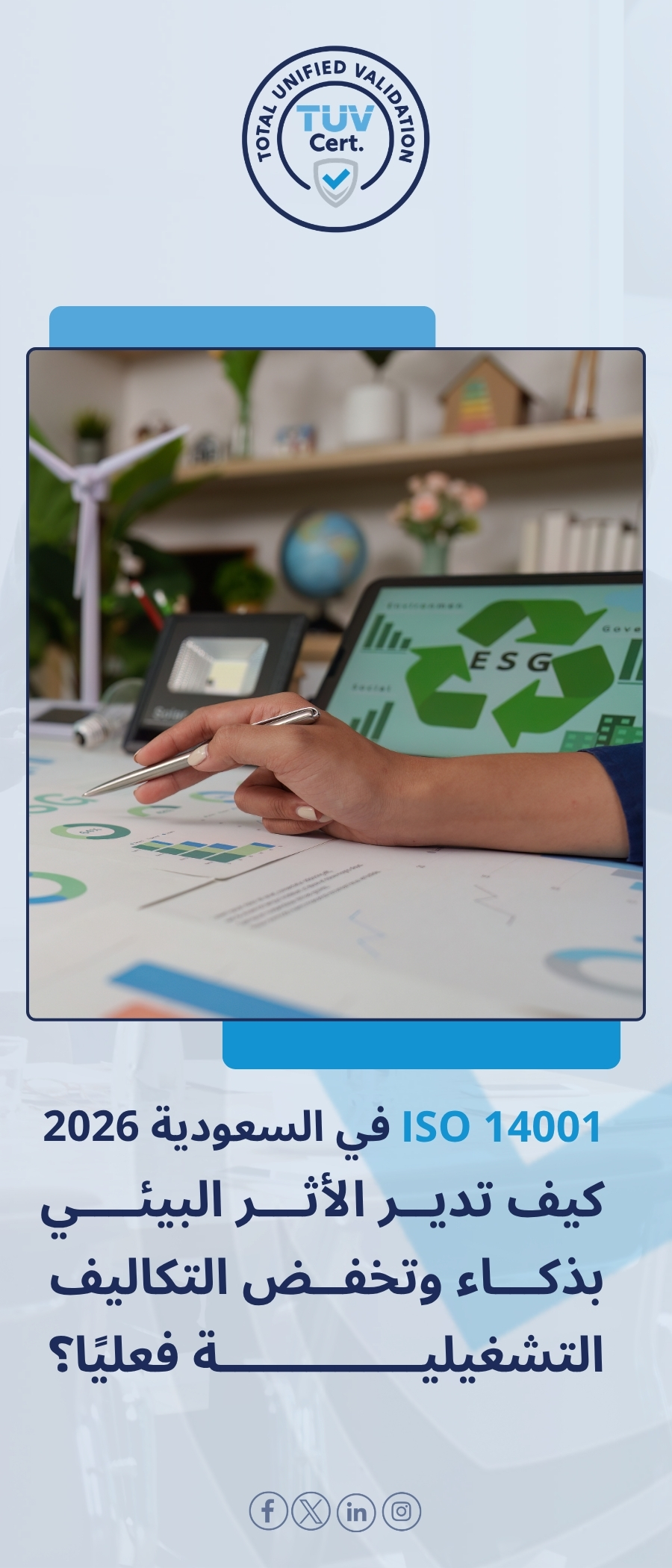
ISO 14001 in Saudi Arabia 2026: How to Manage Environmental Impact Smartly and Actually Reduce Operating Costs
Many companies view ISO 14001 as just an environmental obligation or a regulatory requirement… but the reality is much deeper. Organizations that properly implement an Environmental Management System achieve significant reductions in waste and resource consumption, lower operating costs, and an improved image with customers and regulators. The real difference is not in “getting certified,” but in managing environmental impact intelligently and measurably.
A closer look at ISO 14001 implementation in Saudi Arabia shows that it is no longer just a compliance standard—it has become a strategic tool that helps companies restructure their operations more efficiently and sustainably. Organizations that understand its value realize that managing environmental aspects is not only about reducing emissions or meeting regulations, but also about improving financial performance by minimizing waste in energy and resources and eliminating unnecessary long-term costs.
The importance of ISO 14001 in Saudi Arabia is growing alongside the Kingdom’s sustainability goals under Vision 2030. Companies are now expected to demonstrate real, measurable environmental commitment. This is where the system transforms environmental management from a theoretical obligation into a fully operational framework based on measurement, analysis, and continuous improvement—directly enhancing efficiency while reducing environmental and legal risks.
Professional implementation of ISO 14001 also helps build an internal culture of environmental awareness, where every operational decision is linked to its environmental impact and cost. This leads to improved process quality and stronger competitiveness. In today’s market, environmental compliance is no longer optional—it is essential for long-term success.
In this context, TUV stands out as one of the leading certification bodies for ISO 14001 in Saudi Arabia, offering global expertise and strict standards that ensure proper implementation and maximum value in terms of compliance, performance improvement, and real cost reduction.
What is ISO 14001 in Saudi Arabia (Professional Perspective)?
ISO 14001 is not just an environmental certificate—it is a complete management system designed to control environmental impact scientifically and systematically.
Implementing ISO 14001 means shifting from reactive actions to proactive management based on data, analysis, and measurable decisions.
Environmental Aspects Identification
This involves identifying all activities that impact the environment, such as energy use, raw materials, emissions, and waste management.
Impact Evaluation
Each activity is assessed based on severity, frequency, and risk. This step often reveals hidden inefficiencies and cost-saving opportunities.
Measurable Environmental Objectives
Companies set clear goals such as reducing energy use or waste, making the system practical and results-driven.
Continuous Improvement
ISO 14001 is dynamic, ensuring ongoing development and long-term efficiency improvements.
How ISO 14001 Transforms Business Performance
Before Implementation
- Uncontrolled resource consumption
- Decisions based on assumptions
- High environmental and legal risks
- Unclear and rising operational costs
After Implementation
- Full control over energy and resources
- Reduced waste and improved efficiency
- Strong compliance with regulations
- Measurable cost savings
Example:
A manufacturing company reduced energy consumption by 25% and waste by 30% after implementing ISO 14001 effectively.
Key Elements of ISO 14001
- Environmental Aspects Identification
- Impact Evaluation
- Measurable Objectives
These elements work together as an integrated system to control environmental impact and improve performance.
Practical Steps to Implement ISO 14001
- Analyze current environmental impact
- Identify key environmental aspects
- Set measurable objectives
- Implement operational controls
- Measure environmental performance
- Conduct audits and continuous improvement
Common Mistakes in ISO 14001 Implementation
- Treating it as paperwork only
- Not linking it to operational costs
- Ignoring performance measurement
Result: A system with no real impact.
Why Choose TUV?
- Practical, not theoretical implementation
- Focus on linking environment, performance, and cost
- Full support from assessment to certification
- Real systems—not just documentation
Conclusion
Implementing ISO 14001 in Saudi Arabia is not just compliance—it is a strategic investment in sustainability and operational efficiency. Companies that apply it correctly achieve:
- Lower operating costs
- Better environmental performance
- Stronger market positioning
With expert support from TUV, organizations can turn ISO 14001 into a powerful tool for growth and long-term success.
FAQ
Is ISO 14001 mandatory?
No, but it is increasingly required in major projects and government contracts.
Does it really reduce costs?
Yes, by reducing energy use, waste, and environmental risks.
How long does implementation take?
Typically 2–6 months depending on company size and readiness.