Lifting Equipment Inspection Services and Workplace Safety
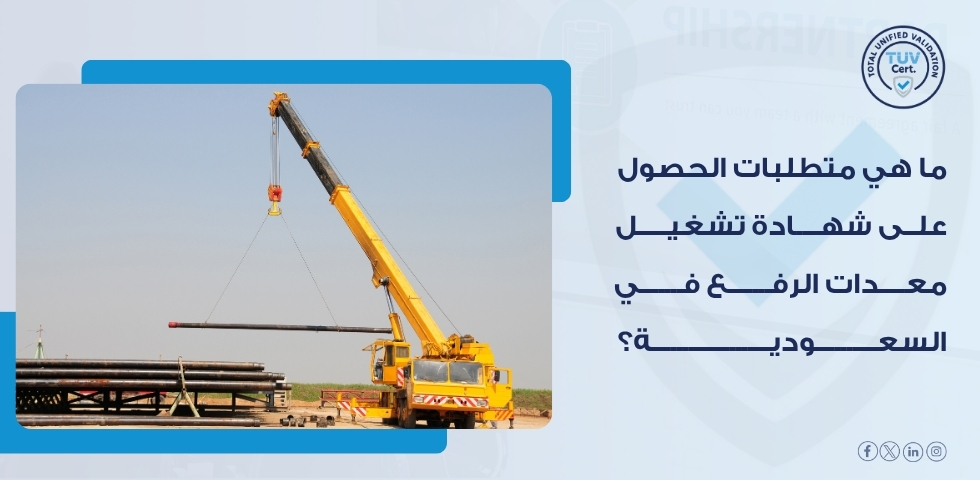
What Are the Requirements for Obtaining a Lifting Equipment Operator Certificate in Saudi Arabia?
Obtaining a lifting equipment operator certificate in Saudi Arabia requires meeting the requirements established by the training provider and the selected training program. These may include enrolling in an appropriate training course, successfully completing the required assessments, and acquiring a solid understanding of workplace safety procedures.
Training programs supported by expertise in lifting equipment inspection services and heavy equipment operations help prepare trainees to apply safe working practices in real workplace environments.
Basic Requirements for Obtaining a Lifting Equipment Operator Certificate and Inspection Services in Saudi Arabia
Obtaining a lifting equipment operator certificate involves more than simply attending a training course. It requires meeting a set of requirements designed to prepare trainees to perform their duties in accordance with occupational safety best practices.
While specific requirements may vary between training providers, the primary objective remains the same: ensuring that trainees possess the knowledge and practical skills needed to operate lifting equipment safely in different work environments.
Enroll in an Appropriate Training Program
The first step is selecting a training program that matches the trainee's intended job responsibilities. Ideally, the program should combine theoretical knowledge with practical instruction, enabling participants to understand operating procedures, identify potential hazards, and perform lifting operations safely.
Attend the Training Program Regularly
Consistent attendance is an essential part of the qualification process. Training content is delivered progressively, combining technical knowledge with hands-on applications. This approach helps trainees develop a comprehensive understanding of their responsibilities when operating lifting equipment rather than relying solely on theoretical knowledge.
Gain Knowledge of Safety Procedures
Training programs focus on introducing participants to practices that reduce workplace risks. These include understanding the importance of lifting equipment inspection before use, verifying equipment readiness, and recognizing warning signs that require operations to stop and technical inspections to be carried out. This knowledge is considered one of the most critical competencies for lifting equipment operators across various industries.
Successfully Complete the Required Assessment
Upon completing the training program, some providers require participants to pass an assessment designed to evaluate their understanding of the course material and their ability to apply safe operating procedures. Assessment methods vary depending on the training provider and course structure, so reviewing the program details before enrollment is recommended.
One factor that significantly enhances the quality of training programs is their connection to real-world inspection services experience. This practical expertise helps align training with the challenges workers encounter on project sites. Programs that address heavy equipment operating environments also enable trainees to better understand workplace hazards and learn how to manage them in accordance with industry best practices.
Total Unified Validation (TUV) delivers training programs that combine theoretical instruction with practical application while leveraging its expertise in lifting equipment inspection services and industries that depend on heavy equipment. This integrated approach helps prepare trainees to meet the requirements of diverse workplace environments.
Ultimately, meeting the requirements for a lifting equipment operator certificate is not simply about completing a registration process. It is about building a professional foundation that enables operators to perform their responsibilities confidently while contributing to safer and more efficient workplace operations from day one.
The Importance of Training Before the Practical Assessment in Lifting Equipment Inspection Services
Some workers may already have practical experience operating lifting equipment. However, experience alone is not always sufficient to successfully complete a practical assessment or perform tasks according to professional best practices.
Training serves as the essential stage before assessment, allowing participants to review fundamental concepts, understand operating procedures, and become familiar with the safety requirements that must be followed during lifting operations.
Training extends far beyond theoretical instruction. It focuses on developing the practical skills needed in real workplace environments. Through specialized programs, participants learn how to perform lifting equipment inspections before operation, recognize warning signs that may indicate equipment defects requiring technical inspection, and better understand how to identify and manage potential workplace hazards. This contributes to improved occupational safety and reduced operational errors.
Training prior to the practical assessment typically covers several key areas, including:
-
Applying safe operating procedures throughout all stages of lifting operations.
-
Understanding the fundamentals of lifting equipment inspection before use.
-
Recognizing the role of inspection services in verifying equipment readiness.
-
Understanding the requirements of workplaces that rely on heavy equipment.
-
Developing the ability to assess risks and make informed operational decisions.
-
Following best practices that enhance lifting equipment safety and maintain operational efficiency.
This stage becomes even more important in industries where heavy equipment is used daily. Workers need practical skills that enable them to confidently manage different operating conditions while maintaining high levels of safety and efficiency.
Training also familiarizes participants with best practices for equipment inspection, emphasizing the importance of routine inspections and pre-operation checks to ensure continuous, safe, and reliable operations.
Organizations that provide specialized training programs often leverage their field experience to develop course content that closely reflects real project environments. For this reason, Total Unified Validation (TUV) draws on its expertise in lifting equipment inspection services to deliver programs that combine theoretical knowledge with practical applications, helping trainees understand safe operating requirements and effectively address the challenges associated with heavy equipment operation.
In reality, the practical assessment is not the starting point—it is the stage that demonstrates how effectively participants have benefited from their training. The more comprehensive the training program is in covering technical knowledge, practical skills, and safety procedures, the better prepared trainees will be to apply what they have learned confidently on the job, transforming knowledge into professional performance that supports worker safety, equipment reliability, and operational continuity.