Inspection Services for Safe Lifting Operations
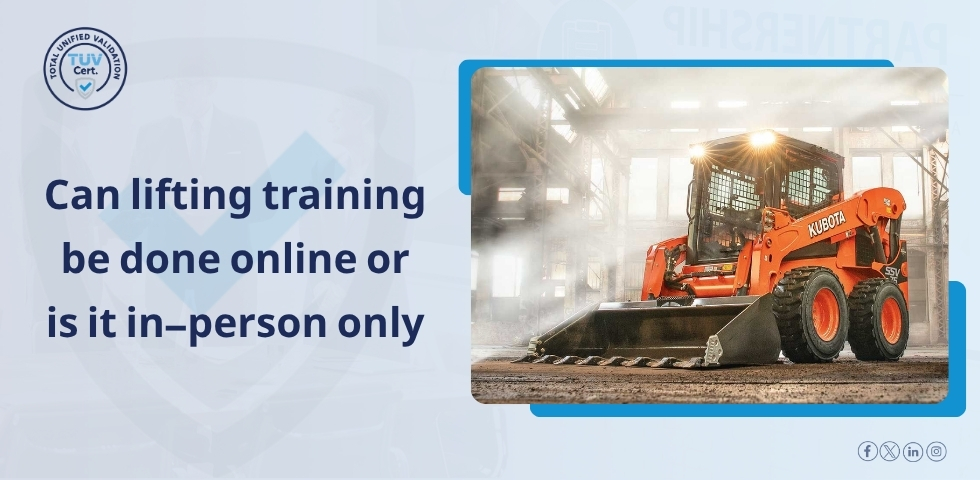
Can lifting training be done online or is it in-person only
Choosing between online and in-person lifting training depends on the skills required, course objectives, and industry expectations. While online learning can provide valuable theoretical knowledge, practical experience remains essential for lifting operations. Combined with professional Inspection Services, proper training helps ensure operators understand safety procedures and work confidently with lifting equipment. TUV supports organizations with reliable training and inspection solutions.
Can Lifting Training Be Completed Online?
Online learning has become a flexible option for many professional training programs, but lifting training requires careful consideration because it involves both theoretical knowledge and practical skills. While some parts of lifting training can be delivered online, hands-on experience remains essential for developing real operational competence. Alongside proper training methods, professional Inspection Services help ensure that lifting equipment remains safe and suitable for practical operations.
The online format can be useful for learning the fundamental concepts behind lifting operations. Participants can study safety procedures, lifting terminology, risk assessment principles, and basic equipment knowledge remotely. However, practical skills such as operating equipment, securing loads, and responding to real workplace situations require supervised hands-on training. Regular Inspection Services also play an important role in confirming that equipment used during practical training meets safety requirements.
Online lifting training may include topics such as:
- Introduction to lifting safety principles.
- Understanding lifting roles and responsibilities.
- Basic hazard identification.
- Overview of lifting equipment types.
- Workplace safety procedures.
- Risk assessment fundamentals.
- The importance of Inspection Services in maintaining equipment safety.
However, lifting operations involve real-time decisions that cannot always be developed through online lessons alone. Operators, riggers, slingers, and lifting supervisors need practical experience to understand equipment behavior, communication methods, and safe handling techniques. This is why many professional lifting programs combine theoretical learning with practical assessments to ensure participants are fully prepared.
At TUV, lifting training programs focus on developing real workplace competence through structured learning and practical evaluation. While theoretical knowledge can support flexible learning methods, TUV emphasizes the importance of practical skills assessment to ensure participants can safely perform lifting activities. In addition, TUV provides professional Inspection Services that help organizations verify the condition, safety, and compliance of lifting equipment used in different industries.
Choosing between online and in-person training depends on several factors, including:
- The type of lifting equipment involved.
- The participant’s current level of experience.
- Certification requirements.
- Employer and industry expectations.
- The need for practical assessment.
- The complexity of lifting operations.
For many lifting roles, a blended approach can provide the best results. Online learning can help participants understand safety concepts and prepare before practical sessions, while in-person training develops the physical skills needed for real operations. When combined with regular Inspection Services, this approach supports both operator competence and equipment reliability.
Organizations should carefully evaluate training providers to ensure they offer programs that match industry needs. A reliable provider should focus not only on course completion but also on developing qualified professionals who understand safety, equipment handling, and operational responsibilities.
By choosing TUV for lifting training and professional Inspection Services, companies can benefit from a complete safety solution that combines knowledge, practical competence, and equipment assurance. This integrated approach helps organizations build skilled teams, reduce operational risks, and maintain safer lifting environments across construction, industrial, and infrastructure projects.
Is In-Person Training Required for Lifting Certifications?
In-person training is an important part of many lifting certifications because lifting operations depend on practical skills, accurate decision-making, and real workplace experience. While theoretical lessons can introduce safety concepts and lifting procedures, hands-on practice helps participants understand how to apply these principles in actual situations. Combined with professional Inspection Services, practical training supports safer operations by ensuring both personnel and equipment meet required safety standards.
Lifting certifications are designed to confirm that individuals have the knowledge and ability to perform their roles safely. For positions such as crane operators, riggers, slingers, banksmen, and lifting supervisors, practical evaluation is often a key part of demonstrating competency. Alongside trained personnel, regular Inspection Services help verify that cranes, lifting accessories, and other equipment remain safe and suitable for use.
In-person lifting training typically focuses on developing skills such as:
- Operating or working around lifting equipment safely.
- Applying correct lifting procedures in real environments.
- Understanding communication methods between lifting teams.
- Securing and handling loads properly.
- Identifying workplace hazards.
- Responding to unexpected situations during lifting activities.
- Understanding how Inspection Services support equipment safety.
The need for practical training depends on the type of certification and the responsibilities of the participant. While some theoretical modules may be completed online, roles that involve direct interaction with lifting equipment usually require practical assessment. This ensures that professionals can demonstrate their ability to apply safety procedures, not just understand them.
At TUV, lifting certification programs are designed to balance theoretical knowledge with practical competency assessment. Participants receive structured training that helps them understand lifting responsibilities, safety requirements, and operational procedures. In addition, TUV provides professional Inspection Services that support organizations by evaluating equipment condition, identifying potential issues, and helping maintain safer lifting environments.
In-person training provides several important benefits, including:
- Real experience with lifting equipment and workplace conditions.
- Direct guidance from qualified instructors.
- Practical evaluation of participant skills.
- Better understanding of safety procedures.
- Improved confidence when performing lifting tasks.
- Stronger preparation for workplace challenges.
- Greater awareness of equipment inspection requirements.
Another important advantage of practical training is that it allows instructors to evaluate how participants respond in real scenarios. A person may understand lifting procedures theoretically but still need guidance when dealing with load positioning, communication challenges, or changing site conditions. Regular Inspection Services complement this process by ensuring that the equipment used during training and operations remains reliable.
For companies, choosing a training provider that includes practical assessment can improve workforce competency and reduce operational risks. Certified professionals who have completed hands-on training are better prepared to follow safety procedures, communicate effectively, and perform their duties confidently.
What Is the Difference Between Online and Practical Lifting Training?
Lifting training can be delivered through different learning methods, but each approach serves a specific purpose. Online training focuses mainly on theoretical knowledge, while practical lifting training develops the hands-on skills required for real workplace situations. When combined with professional Inspection Services, effective training ensures that personnel understand safe procedures while working with reliable and properly maintained lifting equipment.
The main difference between online and practical training is the level of direct experience participants receive. Online courses allow learners to study safety principles, lifting procedures, and equipment basics remotely, making them a flexible option for theoretical learning. However, practical training gives participants the opportunity to apply what they learn under professional supervision and understand how lifting operations work in real environments.
Online lifting training usually focuses on areas such as:
- Introduction to lifting safety concepts.
- Understanding lifting roles and responsibilities.
- Learning basic equipment terminology.
- Studying risk assessment principles.
- Reviewing workplace safety procedures.
- Understanding the importance of Inspection Services in lifting operations.
On the other hand, practical lifting training focuses on developing physical and operational skills that cannot be gained through online lessons alone. Participants learn how to handle equipment, communicate with lifting teams, identify real hazards, and respond to changing site conditions. These practical abilities are essential for roles such as crane operators, riggers, slingers, banksmen, and lifting supervisors.
Practical training typically includes:
- Hands-on equipment handling.
- Load securing and lifting procedures.
- Communication between lifting team members.
- Real-time hazard identification.
- Practical safety assessments.
- Understanding equipment checks supported by Inspection Services.
At TUV, lifting training programs are designed to provide participants with the knowledge and practical competence needed for safe operations. While online learning can support theoretical understanding, TUV emphasizes the importance of practical assessment to ensure professionals are prepared for real workplace challenges. In addition, TUV provides trusted Inspection Services that help organizations evaluate lifting equipment condition, safety, and compliance.
Choosing the right training method depends on several factors, including:
- The type of lifting certification required.
- The participant’s current experience level.
- The specific job responsibilities.
- Industry requirements.
- The need for hands-on equipment practice.
- Employer safety standards.
A balanced training approach often provides the best results. Online learning can help participants build a strong theoretical foundation before attending practical sessions, while hands-on training ensures they can apply their knowledge safely. Supported by regular Inspection Services, this combination improves both workforce competence and equipment reliability.
For organizations, investing in both practical training and professional Inspection Services creates a stronger safety system. Qualified personnel who understand lifting procedures and work with inspected equipment are better prepared to prevent incidents, improve efficiency, and maintain compliance with workplace safety requirements.
Which Parts of Lifting Training Require Hands-On Practice?
While theoretical knowledge is an essential part of lifting training, many skills require direct practice to ensure professionals can perform their responsibilities safely. Hands-on training allows participants to experience real workplace situations, understand equipment behavior, and improve their ability to make safe decisions. Combined with professional Inspection Services, practical learning helps ensure that both personnel and lifting equipment meet required safety standards.
Not every part of lifting training requires physical practice. Some topics, such as safety principles, regulations, and basic lifting concepts, can be introduced through classroom or online learning. However, tasks that involve operating equipment, securing loads, or managing lifting activities require practical experience under qualified supervision. Regular Inspection Services also support this process by confirming that training equipment is safe and suitable for practical exercises.
The main parts of lifting training that require hands-on practice include:
- Equipment Operation: Learning how to safely operate or work around lifting equipment in real conditions.
- Load Handling and Securing: Practicing how to attach, balance, and secure different types of loads correctly.
- Rigging Techniques: Applying proper methods for selecting and using slings, shackles, hooks, and other lifting accessories.
- Communication Procedures: Practicing signals and coordination between operators, riggers, slingers, and banksmen.
- Risk Identification: Recognizing workplace hazards and responding to changing site conditions.
- Emergency Response: Learning how to handle unexpected situations during lifting operations.
Practical training is especially important because lifting activities involve variables that cannot always be understood through theory alone. Factors such as load movement, equipment positioning, visibility limitations, and workplace conditions require real experience. Through hands-on practice and professional Inspection Services, participants can develop stronger confidence and a better understanding of safe lifting procedures.
At TUV, lifting training programs focus on combining theoretical knowledge with practical competency assessment. Participants have the opportunity to develop the skills needed for their specific roles, whether they are crane operators, riggers, slingers, banksmen, or lifting supervisors. In addition, TUV provides reliable Inspection Services that help organizations verify lifting equipment safety, identify potential issues, and maintain compliance with industry requirements.
Hands-on practice provides several important benefits, including:
- Building confidence when performing lifting tasks.
- Improving coordination between lifting team members.
- Developing better decision-making skills.
- Understanding equipment limitations and capabilities.
- Reducing the risk of operational mistakes.
- Preparing participants for real workplace challenges.
- Supporting safer equipment use through proper inspection awareness.
Another important aspect of practical training is the ability to receive direct feedback from experienced instructors. This allows participants to correct mistakes, improve their techniques, and understand how safety procedures should be applied in different situations. When supported by ongoing Inspection Services, organizations can create a stronger system where trained personnel and safe equipment work together effectively.
For companies, choosing a training provider that includes practical assessment can make a significant difference in workplace safety. Employees who have hands-on experience are more prepared to manage lifting activities, identify risks, and follow correct procedures during daily operations.
How Inspection Services Support Effective Lifting Training
Effective lifting training is not only about developing skilled personnel; it also depends on ensuring that the equipment used during operations and practical assessments is safe and reliable. Professional Inspection Services play an essential role in supporting lifting training by verifying equipment condition, identifying potential risks, and helping organizations create safer learning environments for operators, riggers, slingers, and lifting supervisors.
During lifting training, participants need to work with equipment that reflects real workplace conditions. Using properly inspected cranes, lifting accessories, and related equipment allows trainees to practice safely and understand correct operating procedures. Through regular Inspection Services, organizations can confirm that equipment meets safety requirements and remains suitable for training activities.
Inspection Services support effective lifting training by helping with:
- Equipment Safety Verification: Ensuring cranes, slings, hooks, shackles, and lifting accessories are in proper working condition.
- Risk Reduction: Identifying equipment issues before they create hazards during practical training.
- Compliance Support: Helping organizations maintain alignment with safety standards and workplace requirements.
- Preventive Maintenance Planning: Detecting early signs of wear, damage, or performance issues.
- Training Reliability: Providing confidence that practical exercises are conducted using safe and suitable equipment.
The connection between training and equipment inspection is important because even highly trained personnel depend on reliable tools to perform lifting activities safely. A trainee may understand the correct procedures, but damaged or unsuitable equipment can increase operational risks. This is why combining professional training with regular Inspection Services creates a more complete approach to lifting safety.
At TUV, lifting training programs are designed to develop practical competence while emphasizing the importance of equipment safety. Participants learn how to perform lifting tasks correctly, identify potential hazards, and understand the relationship between personnel skills and equipment condition. Alongside training solutions, TUV provides trusted Inspection Services that help organizations assess lifting equipment performance, improve safety practices, and maintain operational readiness.
Integrating Inspection Services into lifting training provides several key benefits:
- Safer practical training environments.
- Better understanding of equipment limitations.
- Reduced risk of equipment-related incidents.
- Improved confidence among trainees.
- Stronger compliance with safety procedures.
- More effective preparation for real workplace operations.
- Improved equipment reliability over time.
Another advantage of combining inspection with training is that it helps participants develop a safety-focused mindset. Trainees learn that safe lifting does not depend only on following procedures but also on understanding equipment conditions and recognizing when equipment should not be used. Regular Inspection Services reinforce this awareness and encourage proactive safety practices.
For organizations, investing in both professional training and Inspection Services creates a stronger lifting safety system. Skilled employees supported by properly inspected equipment are better prepared to manage daily operations, reduce risks, and maintain productivity without compromising workplace safety.
By choosing TUV for lifting training and professional Inspection Services, businesses gain a complete solution that combines workforce development with equipment assurance. This integrated approach helps organizations build safer teams, improve operational efficiency, and maintain high standards across construction, industrial, and infrastructure lifting operations.
Effective lifting training requires more than developing technical skills; it also depends on ensuring that the equipment used during operations is safe and reliable. Professional Inspection Services provide essential support by verifying equipment condition, reducing risks, and helping organizations maintain safer training and working environments. With TUV, businesses can benefit from comprehensive lifting training programs combined with trusted Inspection Services to develop qualified personnel, improve compliance, and achieve safer lifting operations.
Frequently Asked Questions About Online Lifting Training
1. Why are Inspection Services important for lifting training?
Inspection Services help ensure that cranes, lifting accessories, and other equipment used during training are safe, reliable, and suitable for practical exercises. This reduces risks and allows trainees to develop skills in a secure environment.
2. How do Inspection Services improve lifting safety?
Professional Inspection Services identify equipment defects, verify compliance, and detect potential issues before they lead to failures. This supports safer lifting operations and helps organizations maintain reliable equipment.
3. Should lifting equipment be inspected before practical training?
Yes. Before practical lifting training begins, equipment should be checked to confirm that it is in proper working condition. Regular inspections help create a safer environment for trainees and instructors.
4. Can Inspection Services replace lifting training?
No. Inspection Services and lifting training serve different purposes. Training develops the skills and knowledge of personnel, while inspections ensure that the equipment they use is safe and compliant. Both are essential for effective lifting operations.
5. What equipment is usually covered by Inspection Services?
Inspection Services may include checks of cranes, lifting accessories, slings, hooks, shackles, and other equipment used in lifting operations. The exact scope depends on the equipment type and workplace requirements.
6. How does TUV support lifting training and equipment safety?
TUV provides professional lifting training programs that focus on developing practical skills and safety awareness. In addition, TUV offers trusted Inspection Services to help organizations verify equipment condition and maintain operational safety.
7. Who can benefit from combining lifting training with Inspection Services?
Companies involved in construction, manufacturing, logistics, energy, and industrial operations can benefit from combining qualified personnel training with regular Inspection Services to improve safety and efficiency.
8. How often should lifting equipment undergo Inspection Services?
The frequency of Inspection Services depends on equipment type, usage conditions, manufacturer recommendations, and workplace safety requirements. Regular inspections help identify problems early and maintain equipment performance.