Lifting Equipment Inspection Services and Heavy Equipment Safety
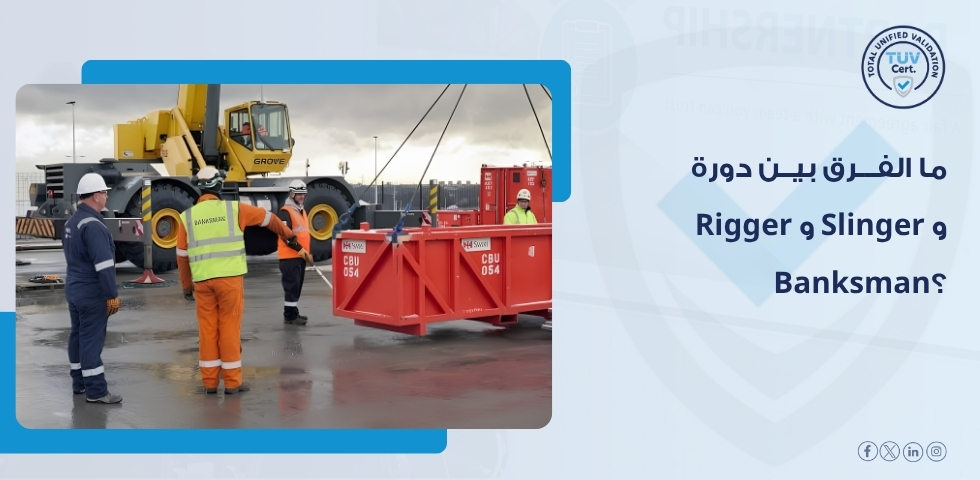
What Is the Difference Between Rigger, Slinger, and Banksman Training Courses?
Rigger, Slinger, and Banksman training courses differ according to the responsibilities and skills each role requires within lifting operations. A Rigger is responsible for planning and organizing lifting activities, a Slinger focuses on attaching and preparing loads, while a Banksman directs equipment movement and communicates with the crane operator during lifting operations. Choosing the right course depends on the nature of the job and the safety requirements of the worksite.
What Is the Role of a Rigger, Slinger, and Banksman in Lifting Operations?
Successful lifting operations rely on the coordination of several specialized roles—not just the crane operator. Each of the Rigger, Slinger, and Banksman performs specific responsibilities that contribute to safe, organized, and efficient lifting activities.
While the Rigger plans and prepares the lifting operation, the Slinger secures and prepares the load for lifting, and the Banksman guides equipment movement and maintains communication with the operator throughout the process. These responsibilities are carried out in accordance with lifting equipment inspection services and heavy equipment safety procedures.
The Role of a Rigger in Lifting Operations
The Rigger plays a critical role in planning and preparing lifting operations before they begin. Their responsibilities extend beyond selecting lifting accessories to understanding load characteristics, choosing appropriate lifting methods, determining secure attachment points, and planning the lifting path.
Typical Rigger responsibilities include:
-
Selecting suitable lifting equipment and accessories for the load.
-
Inspecting lifting gear before use.
-
Determining the safest lifting method.
-
Coordinating with the crane operator and lifting team.
-
Following risk assessment procedures before lifting begins.
This role is especially important when working with heavy equipment, as improper load preparation or incorrect lifting gear selection can compromise the safety of the entire operation. Consequently, the Rigger's responsibilities are closely connected to lifting equipment inspection and verifying that all equipment is fit for use before operation.
What Does a Slinger Do During Lifting Operations?
The Slinger is primarily responsible for the direct handling and attachment of loads before lifting begins. Their role is to secure the load using appropriate lifting accessories to ensure stability throughout the lifting and transportation process.
Typical Slinger responsibilities include:
-
Inspecting slings, chains, and lifting accessories before use.
-
Selecting the appropriate attachment method for the load.
-
Ensuring the load is properly balanced before lifting.
-
Monitoring the load during preparation.
-
Communicating with the lifting team whenever concerns arise.
At this stage, lifting equipment inspection services play an important role by ensuring that lifting accessories and equipment are regularly inspected and maintained, reducing the likelihood of operational failures during lifting activities.
What Are the Responsibilities of a Banksman?
The Banksman performs a different role from both the Rigger and the Slinger. Their primary responsibility is directing equipment movement and maintaining clear communication with the crane operator, particularly when visibility is limited or when lifting operations require close coordination among multiple team members.
Typical Banksman responsibilities include:
-
Providing clear hand signals and communication to the crane operator.
-
Monitoring the movement path of the load.
-
Ensuring the work area remains free from obstacles.
-
Assisting with the safe movement of equipment around the worksite.
-
Supporting the implementation of lifting safety procedures.
Effective communication between the Banksman and the equipment operator is essential for successful lifting operations, especially on construction sites and industrial facilities where heavy equipment is frequently used.
The Relationship Between Rigger, Slinger, Banksman, and Lifting Equipment Inspection
Although these roles involve different responsibilities, they work together as part of one integrated lifting operation with the shared objective of completing lifts safely and efficiently.
High-quality training programs not only explain each individual's responsibilities but also demonstrate how personnel, lifting equipment, and workplace safety procedures interact.
Lifting equipment inspection services and heavy equipment inspections strengthen this process by ensuring equipment readiness, verifying the condition of lifting accessories, and carrying out pre-use equipment inspections.
Having qualified personnel working with properly inspected lifting equipment significantly reduces workplace risks while improving operational safety and efficiency.
How Training Courses Prepare Riggers, Slingers, and Banksmen
Although the training requirements vary depending on the role, specialized programs generally aim to develop participants' skills in several key areas, including:
-
Understanding the principles of lifting operations.
-
Identifying workplace hazards and implementing appropriate control measures.
-
Applying pre-operation inspection procedures.
-
Understanding lifting equipment safety requirements.
-
Improving communication and coordination among lifting teams.
Total Unified Validation (TUV) offers professional training programs designed to enhance the competence of personnel involved in lifting operations. Leveraging its expertise in lifting equipment inspection services and heavy equipment operations, TUV delivers practical training that reflects real workplace conditions and industry requirements.
In summary, Riggers, Slingers, and Banksmen should not be viewed as completely separate roles. Instead, they are interconnected members of the same lifting team, each contributing to safer, more organized, and more efficient lifting operations. Selecting the appropriate training for each role, combined with proper lifting equipment inspection procedures and inspection services, helps organizations build highly competent teams capable of meeting the challenges of modern industrial and construction worksites.