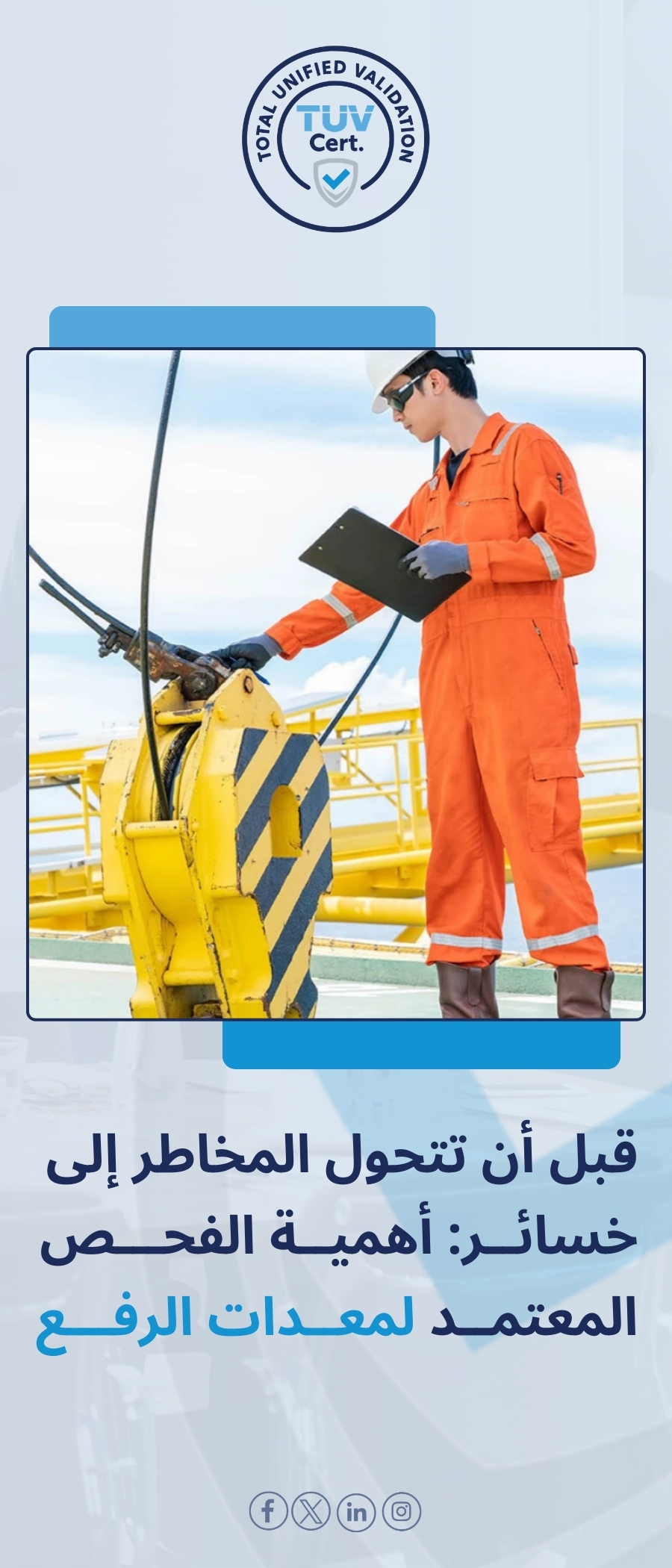
Lifting equipment inspection certificate in Saudi Arabia - when do companies need to renew it?
When Do Companies Need to Renew Their Lifting Equipment Inspection Certificate to Ensure Regulatory Compliance?
In the industrial business environment within the Kingdom of Saudi Arabia, a lifting equipment inspection certificate is not merely a formal procedure; it is a fundamental element to ensure operational safety and compliance with approved regulations. With the increasing requirements for heavy equipment inspections in Saudi Arabia and the stipulations of regulatory authorities, adhering to periodic inspections has become a necessity that cannot be ignored, especially in facilities that rely on cranes and heavy equipment in their daily operations. Here, the pivotal role of issuing a lifting equipment inspection certificate in Saudi Arabia emerges, serving as an official document confirming equipment readiness and compliance with approved safety standards.
Determining the appropriate time for inspection renewal depends not only on a schedule but also on multiple operational factors such as usage intensity, the nature of the work environment, and any technical changes to the equipment. Therefore, many companies ask: When exactly do they need to renew a lifting equipment inspection certificate in Saudi Arabia to ensure full regulatory compliance? The answer lies in adhering to inspection procedures conducted by a competent and experienced lifting equipment inspection body in Saudi Arabia capable of performing technical evaluations according to local and international standards.
Specialized authorities, notably Total Unified Validation – TUV, play a crucial role in providing inspection, certification, and compliance verification services, ensuring equipment meets safety requirements, supporting business continuity, and enhancing operational confidence within facilities. Relying on a professional entity for heavy equipment inspection in Saudi Arabia is not limited to issuing the certificate; it also includes precise technical assessments, safety verification, and documentation according to a clear methodology that guarantees transparency and reliability.
With increased focus on industrial safety concepts, compliance with regulations, and occupational safety standards, updating lifting equipment inspection certificates in Saudi Arabia has become an integral part of corporate risk management. Timely renewal helps reduce the likelihood of malfunctions, prevent accidents, improve operational efficiency, and maintain readiness for any regulatory audits or official inspections.
Companies working with an accredited inspection body in Saudi Arabia understand that inspection is not merely an administrative procedure but a strategic step to ensure continuity and protect both human and material assets. By adhering to the requirements for issuing a lifting equipment inspection certificate in Saudi Arabia under regulatory frameworks, facilities can cultivate a safety culture and achieve the highest levels of institutional compliance.
Signs Indicating the Need to Renew a Lifting Equipment Inspection Certificate
Monitoring the technical condition of equipment in industrial facilities is a core part of safety and regulatory compliance, especially for equipment subjected to continuous operational loads. With repeated use, clear indicators may emerge, necessitating re-evaluation. In such cases, renewing the lifting equipment inspection certificate in Saudi Arabia becomes a regulatory requirement, not just an administrative option. Facilities using cranes or loading equipment are required to comply with heavy equipment inspection standards in Saudi Arabia to ensure equipment remains within safe operational limits.
1. Internal Technical Indicators Requiring Renewal:
-
Frequent malfunctions or unexpected equipment stoppages
-
Noticeable decline in operational efficiency
-
Unusual vibrations or noises during use
-
Changes in load capacity or structural safety observations
-
Approaching expiration of the current lifting equipment inspection certificate in Saudi Arabia
When any of these indicators appear, it is essential to contact an accredited lifting equipment inspection body in Saudi Arabia to perform a technical re-evaluation and issue a precise report assessing equipment compliance with current safety standards.
2. Regulatory and Compliance Indicators:
-
Approaching expiration of the lifting equipment inspection certificate in Saudi Arabia
-
Updates to internal systems requiring equipment re-certification
-
New requirements from regulatory authorities
-
Operational modifications to the work environment
-
Maintaining ongoing compliance within approved safety programs
Timely renewal of lifting equipment inspection certificates reflects institutional readiness and confirms that the facility complies with official issuance procedures in Saudi Arabia.
3. Operational Changes Requiring Re-Inspection:
-
Relocation of equipment to a new site
-
Increased daily operating hours
-
Change in load types or usage patterns
-
Work in higher-risk environments
-
Need for regular compliance with heavy equipment inspection requirements in Saudi Arabia
In such cases, collaboration with a specialized entity is a strategic step to ensure accurate evaluation. Total Unified Validation – TUV stands out as a professional authority in accreditation, inspection, and training within Saudi Arabia, employing a clear methodology for heavy equipment inspection and issuing technical reports according to precise standards.
4. Safety and Continuity Considerations:
-
Enhance preventive measures in the workplace
-
Reduce the likelihood of equipment-related accidents
-
Support corporate risk management plans
-
Ensure uninterrupted operations
-
Maintain validity of the lifting equipment inspection certificate in Saudi Arabia
Ignoring signs indicating the need for renewal may lead to operational disruptions or regulatory observations, whereas timely follow-up with an accredited inspection body in Saudi Arabia ensures ongoing compliance and operational reliability.
Situations Requiring Re-Issuance of a Lifting Equipment Inspection Certificate
Re-issuing technical equipment documents is not done arbitrarily; it is linked to regulatory and operational conditions that necessitate updating evaluations to maintain compliance. When work conditions change or usage specifications are altered, re-issuing a lifting equipment inspection certificate in Saudi Arabia according to approved frameworks becomes necessary. Safety depends on regular adherence to heavy equipment inspection requirements, especially in sectors heavily utilizing cranes and loading equipment.
Key cases requiring re-issuance include:
1. Changes in Equipment Technical Condition:
-
Frequent malfunctions affecting operational efficiency
-
Major modifications or repairs to cranes
-
Replacement of key components in the lifting system
-
Signs of wear or structural weakness
-
Technical observations requiring comprehensive re-evaluation
2. Changes in Operational Environment:
-
Equipment relocation
-
Working in different industrial or climatic conditions
-
Increased daily usage rates
-
Introducing loads beyond previous ranges
-
Updating heavy equipment inspection procedures to match new operational realities
3. Regulatory or Compliance Requirements:
-
Updates in approved regulations
-
Requests for new compliance reports from authorities
-
Expiry of previous certificates
-
Inclusion of the facility in periodic audit programs
-
Ensuring re-issuance of lifting equipment inspection certificates for ongoing compliance
4. Corporate Safety Considerations:
-
Updating risk management plans
-
Enhancing preventive measures after internal reviews
-
Responding to occupational safety recommendations
-
Supporting operational and emergency readiness
-
Maintaining validity of lifting equipment inspection certificates within continuous compliance cycles
TUV, as a specialized authority in heavy equipment inspection in Saudi Arabia, ensures re-issuance follows a precise methodology based on detailed evaluations and organized documentation. Working with an accredited inspection body guarantees that re-issuance is based on objective results and reliable reports, supporting official certificate issuance.
Adhering to re-issuance procedures reflects serious commitment to safety requirements and shows that compliance is a top operational priority. Continuity in heavy equipment inspections in Saudi Arabia is not limited to documentation but includes a comprehensive system of evaluation, review, and documentation to ensure equipment remains within safe operational limits.
Timely re-issuance via TUV strengthens institutional trust, supports operational stability, and makes lifting equipment inspection certification a proactive measure for protecting human and material assets. Compliance with these procedures is not just a regulatory requirement but a key part of safety management within facilities relying on lifting equipment inspection certificates as an approved operational reference.
Role of Periodic Inspections in Determining Renewal Timing
In an environment dependent on heavy machinery and cranes, safety cannot be separated from regular monitoring, and inspections cannot be considered one-time procedures. The true role of periodic inspections is as a continuous measurement tool that helps facilities determine the appropriate timing to renew official documents, primarily the lifting equipment inspection certificate in Saudi Arabia. By regularly reviewing operational conditions, renewal decisions become more precise, especially when meeting heavy equipment inspection requirements in Saudi Arabia across industrial and logistical sectors.
Periodic inspections go beyond technical verification; they track operational and structural changes affecting equipment readiness. When inspection results indicate the need for re-certification, it clearly signals the necessity to initiate the issuance of a lifting equipment inspection certificate through an accredited Saudi inspection body such as TUV. Regular review directly protects the facility from operational interruptions or unexpected regulatory observations.
1. Continuous Technical Assessment:
-
Measure crane performance during daily operation
-
Monitor changes in loading efficiency
-
Track unusual vibrations or noise
-
Inspect safety elements and installation systems
-
Determine the need to renew lifting equipment inspection certificates based on technical results
2. Supporting Renewal Decisions with Data:
-
Rely on documented reports from heavy equipment inspections in Saudi Arabia
-
Compare current and previous inspection results
-
Identify technical gaps if present
-
Officially document technical recommendations
-
Prepare for certificate issuance when needed
3. Enhancing Regulatory Compliance:
-
Ensure equipment aligns with approved requirements
-
Review validity of existing documentation
-
Update internal safety records
-
Adhere to the scheduled periodic inspection program
-
Collaborate with a Saudi inspection body for accuracy and impartiality
Within this framework, TUV stands out as a specialized body executing heavy equipment inspection programs in Saudi Arabia according to a clear methodology based on organized technical evaluation and precise documentation. Working with an accredited body during each inspection cycle helps determine the optimal time to renew lifting equipment inspection certificates, making certificate issuance part of a continuous administrative system rather than a separate process.
Periodic inspections provide facilities with proactive insights, allowing potential issues to be addressed before becoming operational problems and enabling pre-planned renewals without time pressure. Using documented results from an accredited Saudi inspection body like TUV ensures renewal decisions are based on accurate data reflecting the actual condition of the equipment.
Regular inspections boost workplace confidence, reduce the likelihood of unexpected stoppages, and support industrial operation continuity. Ultimately, the role of periodic inspections in determining renewal timing extends beyond technical aspects, becoming a core component of risk management and full compliance with heavy equipment inspection requirements in Saudi Arabia, ensuring that lifting equipment inspection certificates remain valid and aligned with the highest safety standards through clear issuance and renewal procedures via TUV as a trusted accredited body.
When Does Renewal Become Mandatory?
In industrial compliance, technical document renewal is not optional; it is governed by clear rules defining when it becomes mandatory. Renewing lifting equipment inspection certificates in Saudi Arabia becomes obligatory when the current certificate expires, when new regulatory requirements are issued, or when operational changes affect equipment safety. In these cases, renewal transitions from an administrative option to a regulatory obligation aligned with heavy equipment inspection requirements in Saudi industrial environments.
1. Upon Expiration of the Approved Validity Period:
-
Expiration of the current lifting equipment inspection certificate in Saudi Arabia
-
Approaching renewal dates according to the approved schedule
-
No active certificate covering operational periods
-
Need for uninterrupted compliance
-
Initiate certificate issuance immediately after expiration
2. Upon Issuance of Regulatory or Compliance Requirements:
-
Updates to regulations regarding heavy equipment inspections in Saudi Arabia
-
Requests for official compliance reports from authorities
-
Inclusion of the facility in periodic audits
-
Internal system updates requiring re-certification
-
Mandatory engagement with an accredited Saudi inspection body
3. Upon Major Operational Changes:
-
Equipment relocation
-
Changes in usage type or load nature
-
Technical modifications to cranes
-
Increased daily operational hours
-
Need for re-evaluation before renewal of the lifting equipment inspection certificate in Saudi Arabia
4. Upon Emergence of Technical Indicators Requiring Re-Certification:
-
Repeated malfunctions affecting safety
-
Internal inspection observations
-
Technical recommendations for re-evaluation
-
Decline in performance efficiency
-
Requirement to complete official lifting equipment inspection certificate issuance procedures
In this context, cooperation with a specialized entity such as TUV is essential. Relying on TUV for heavy equipment inspections in Saudi Arabia ensures that the renewal of lifting equipment inspection certificates is based on precise technical evaluation, documented reports, and a clear methodology compliant with regulatory requirements.
When renewal becomes mandatory, coordination with an accredited Saudi inspection body is not limited to document issuance but includes a comprehensive review of equipment condition, verification of safety elements, and assurance of compliance with applicable safety standards. Timely adherence to certificate issuance procedures demonstrates institutional readiness and confirms that compliance is a top operational priority.
The moment renewal becomes a formal obligation depends on a combination of time, regulatory, and operational factors. The basic rule remains: when the certificate expires, new regulatory requirements are issued, or major operational changes occur, renewing the lifting equipment inspection certificate in Saudi Arabia becomes mandatory to ensure continuity and compliance. With TUV as the inspection body, heavy equipment inspections are conducted within a professional framework, establishing trust and operational continuity under the highest safety standards.
In conclusion, monitoring and renewing lifting equipment inspection certificates in Saudi Arabia is not merely an administrative task; it is a core element of safety and compliance within industrial facilities. Timely renewal, relying on accredited heavy equipment inspection procedures, ensures operational continuity and minimizes risks associated with crane and heavy equipment use. Adhering to issuance requirements via an accredited inspection body demonstrates institutional readiness and builds trust with regulators, partners, and clients.
Renewal or re-issuance decisions should be based on precise technical evaluations, documented reports, and clear methodologies to guarantee full compliance. Specialized inspection and accreditation authorities, notably TUV, play a pivotal role in supporting companies in executing heavy equipment inspections and lifting equipment certificate issuance with efficiency, transparency, and high standards.
For facilities aiming to enhance safety, ensure compliance, and maintain uninterrupted validity of lifting equipment inspection certificates in Saudi Arabia, the right step is to engage TUV as an accredited inspection body. Do not postpone renewal—start reviewing your equipment now to ensure business continuity under the highest safety and compliance standards.