Inspection Services and Their Role in Lifting Course Certificate Recognition
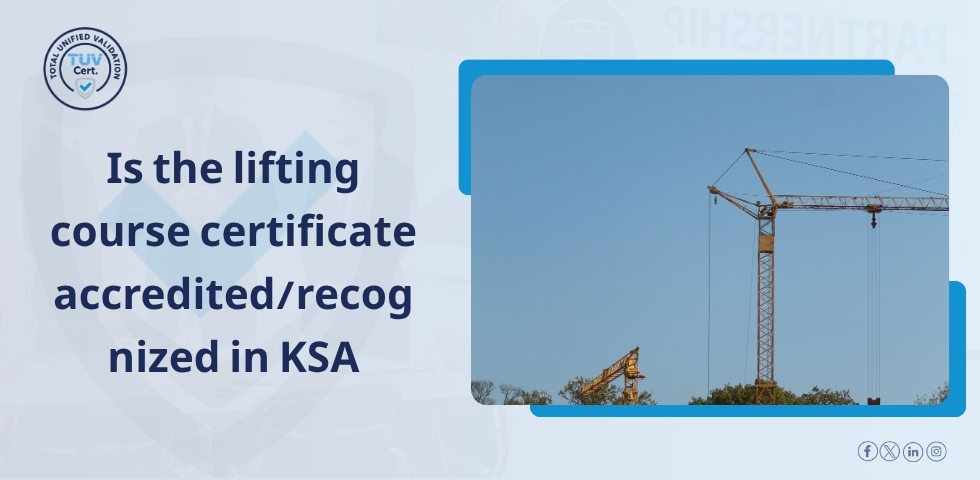
Is the lifting course certificate accredited/recognized in KSA
Choosing a lifting training course involves more than completing the program—it also means ensuring the certificate is recognized and supported by trusted industry practices.
Alongside professional training, Inspection Services play an important role in promoting workplace safety, regulatory compliance, and operational reliability.
TUV provides integrated solutions that support both training and safety excellence.
Is the Lifting Course Certificate Recognized in Saudi Arabia?
Yes, a lifting course certificate can be recognized in Saudi Arabia when it is issued by a reputable training and certification provider that follows established industry practices. However, recognition depends on several factors, including the quality of the training, the competency assessment process, and the provider's commitment to safety standards. In addition to professional training, Inspection Services play a vital role in supporting safe lifting operations by ensuring that both operators and equipment meet workplace requirements.
Recognition is not based on the certificate alone. Employers and project owners often look for training providers that deliver comprehensive learning programs supported by practical assessments and professional Inspection Services. This combination gives organizations greater confidence that certified operators are capable of performing lifting activities safely and efficiently.
A recognized lifting course should include:
- Comprehensive theoretical training.
- Hands-on practical instruction.
- Competency-based assessments.
- Qualified instructors with industry experience.
- Training aligned with recognized industry practices.
- Ongoing commitment to safety through professional Inspection Services.
Many organizations in Saudi Arabia prefer candidates who have completed training with trusted providers because it demonstrates a commitment to workplace safety and professional development. Employers also value providers that offer Inspection Services, as regular equipment inspections help verify that lifting machinery remains safe, reliable, and suitable for operation throughout its service life.
At TUV, lifting training programs are designed to prepare operators for real working environments through structured classroom sessions, practical exercises, and competency assessments. Alongside certification, TUV delivers professional Inspection Services that help organizations evaluate the condition, safety, and compliance of lifting equipment. This integrated approach strengthens operational performance and supports safer lifting activities across multiple industries.
Choosing a provider that combines training with Inspection Services offers several important advantages:
- Improved workplace safety.
- Better operator competence.
- Increased equipment reliability.
- Reduced operational risks.
- Support for regulatory and company compliance.
- Greater confidence during audits and project evaluations.
- Stronger safety culture across the organization.
Another important factor in certificate recognition is continuous improvement. Organizations that invest in refresher training, periodic competency assessments, and regular Inspection Services are better positioned to maintain high safety standards over time. This demonstrates an ongoing commitment to protecting employees, equipment, and project operations rather than viewing certification as a one-time achievement.
Who Recognizes Lifting Course Certificates in KSA?
The recognition of lifting course certificates in Saudi Arabia depends on the credibility of the training provider and the quality of the certification process. Employers, contractors, and project owners typically look for certificates issued by organizations that follow recognized industry practices and place a strong emphasis on competency, workplace safety, and Inspection Services. These factors help ensure that certified personnel are prepared to perform lifting operations safely and responsibly.
In many industries, certificate recognition is driven by operational requirements rather than by the certificate alone. Organizations prefer training providers that combine technical instruction with competency assessments and professional Inspection Services, giving employers greater confidence that both operators and lifting equipment meet the safety expectations of modern workplaces.
Lifting course certificates are commonly recognized by:
- Construction companies.
- Oil and gas contractors.
- Manufacturing facilities.
- Logistics and warehousing companies.
- Industrial maintenance contractors.
- Engineering and infrastructure projects.
- Organizations with strict health and safety requirements.
Large organizations often include operator certification as part of their internal qualification process. Before allowing personnel to work on lifting operations, employers may verify that the certificate was issued by a trusted provider and that it is supported by comprehensive training and reliable Inspection Services. This approach helps reduce workplace risks and promotes compliance with company safety policies.
At TUV, certification programs are designed to meet the expectations of industries that require competent lifting personnel. Every course combines structured theoretical learning, practical training, and competency-based assessments to prepare operators for real workplace challenges. In addition, TUV provides professional Inspection Services that help organizations verify the safety, condition, and operational readiness of lifting equipment, creating a complete solution for workforce and equipment safety.
Why Is an Accredited Training Provider Important?
Choosing an accredited training provider is one of the most important decisions for anyone seeking a lifting course certificate in Saudi Arabia. A trusted provider delivers more than classroom instruction—it ensures trainees develop the practical skills, technical knowledge, and safety awareness required for real workplace operations. In addition, professional Inspection Services strengthen the overall training process by helping organizations maintain safe and compliant lifting equipment.
Accredited providers follow structured training methodologies that focus on competency rather than attendance alone. This means participants are assessed on their ability to perform lifting operations safely, apply industry best practices, and respond effectively to workplace hazards. When combined with reliable Inspection Services, this approach creates a safer working environment for both operators and employers.
A high-quality training provider should offer:
- Qualified instructors with industry experience.
- Comprehensive theoretical and practical training.
- Competency-based assessments.
- Training aligned with recognized industry standards.
- Ongoing technical guidance.
- Professional Inspection Services to support equipment safety.
- A commitment to continuous quality improvement.
One of the biggest advantages of working with an accredited provider is consistency. Every trainee follows a structured learning path that covers the essential knowledge and practical skills required for lifting operations. This ensures that certified operators are prepared to perform safely across different industries and project environments, while regular Inspection Services help verify that the equipment they use remains safe and fit for operation.
At TUV, training is designed to develop real operational competence rather than simply issuing certificates. Experienced instructors guide participants through classroom learning, practical exercises, and competency assessments that reflect actual workplace conditions. Alongside its training programs, TUV delivers professional Inspection Services, helping organizations evaluate lifting equipment, identify potential issues, and support compliance with established safety requirements.
Partnering with an accredited provider such as TUV offers several long-term benefits, including:
- Better-qualified lifting equipment operators.
- Improved workplace safety performance.
- Greater confidence in employee competence.
- Reduced operational risks and equipment-related incidents.
- Enhanced regulatory and client compliance.
- Access to reliable Inspection Services for ongoing equipment verification.
Another important benefit is long-term operational support. Workplace safety does not end when a training course is completed. Organizations that continue investing in refresher training, competency development, and periodic Inspection Services are better equipped to prevent accidents, improve equipment reliability, and maintain consistent operational performance over time.
What Makes a Lifting Course Certificate Credible?
A lifting course certificate is considered credible when it represents proven knowledge, practical competence, and a commitment to workplace safety—not simply course attendance. Employers and project owners want assurance that certified operators can perform lifting activities responsibly while following recognized safety practices. In addition to professional training, Inspection Services contribute to this credibility by helping organizations ensure that lifting equipment operates safely and complies with industry requirements.
The reputation of the training provider is one of the strongest indicators of a certificate's value. Providers that combine structured learning, competency-based assessments, and professional Inspection Services demonstrate a comprehensive approach to safety and operational excellence. This gives employers greater confidence in both the certified operator and the organization that issued the certificate.
A credible lifting course certificate is typically supported by:
- Comprehensive theoretical training.
- Practical, hands-on learning.
- Competency-based written and practical assessments.
- Experienced and qualified instructors.
- Industry-recognized training practices.
- Professional Inspection Services to support equipment safety.
- Ongoing commitment to quality and continuous improvement.
Practical experience is another essential factor. Operators who receive supervised hands-on training are better prepared to handle real lifting operations, identify workplace hazards, and respond appropriately to unexpected situations. When this practical training is complemented by regular Inspection Services, organizations can verify that both personnel and equipment meet the safety standards required for daily operations.
At TUV, every lifting training program is designed to develop practical competence rather than simply issue certificates. Participants complete structured classroom sessions, realistic practical exercises, and competency evaluations that reflect real workplace scenarios. Alongside training, TUV provides professional Inspection Services to assess lifting equipment, helping organizations maintain safe working conditions and reduce operational risks.
Organizations often evaluate a training provider based on the additional value it delivers beyond certification. Choosing a provider that offers both training and Inspection Services provides several important benefits, including:
- Better-qualified lifting equipment operators.
- Improved workplace safety performance.
- Greater confidence in operator competency.
- Enhanced equipment reliability.
- Reduced downtime caused by equipment issues.
- Stronger compliance with company and industry requirements.
- Increased readiness for client audits and inspections.
Another factor that strengthens a certificate's credibility is continuous professional development. Operators who participate in refresher training and companies that schedule regular Inspection Services demonstrate an ongoing commitment to maintaining high safety standards. This proactive approach helps prevent incidents, improves operational efficiency, and supports long-term workforce competence.
How Inspection Services Support Certified Lifting Operations
Professional Inspection Services are a critical part of maintaining safe and efficient lifting operations. While operator certification confirms that personnel have the required knowledge and practical skills, regular equipment inspections help ensure that cranes, lifting accessories, and other equipment remain safe to use. Together, competent operators and reliable Inspection Services create a stronger foundation for workplace safety and operational performance.
Certification alone cannot guarantee safe lifting if the equipment itself is not properly maintained. Routine Inspection Services identify wear, damage, mechanical defects, and other issues that could affect equipment performance. Detecting these problems early helps organizations reduce downtime, prevent costly failures, and minimize the risk of workplace accidents.
Professional Inspection Services typically include:
- Visual inspection of lifting equipment.
- Functional and operational checks.
- Identification of wear, corrosion, or structural damage.
- Verification of safety devices and control systems.
- Inspection of hooks, wire ropes, chains, and lifting accessories.
- Documentation of inspection findings.
- Recommendations for corrective actions when required.
Certified lifting operations rely on both skilled personnel and equipment that performs as intended. Regular Inspection Services provide an additional layer of assurance by confirming that lifting equipment remains suitable for the tasks it is expected to perform. This not only protects employees but also supports uninterrupted project execution and improved operational efficiency.
At TUV, Inspection Services are delivered by experienced professionals using structured inspection procedures that align with recognized industry practices. In addition to operator training and certification, TUV helps organizations evaluate the condition of their lifting equipment, identify potential safety concerns, and support compliance with workplace safety requirements. This integrated approach allows businesses to strengthen both workforce competence and equipment reliability.
Organizations that invest in regular Inspection Services benefit in many ways, including:
- Improved workplace safety.
- Reduced equipment-related failures.
- Greater operational reliability.
- Early detection of maintenance needs.
- Better compliance with company and industry requirements.
- Increased confidence during audits and client inspections.
- Extended service life of lifting equipment.
Another important advantage of Inspection Services is their contribution to preventive maintenance. Inspection reports provide valuable information about equipment condition, allowing maintenance teams to address issues before they become major operational problems. This proactive approach helps reduce unexpected downtime, optimize maintenance planning, and improve the overall performance of lifting assets.
Benefits of Combining Professional Training with Inspection Services
Combining professional operator training with Inspection Services creates a more complete approach to workplace safety than relying on either one alone. Skilled operators need safe and reliable equipment to perform lifting operations effectively, while well-maintained equipment requires competent personnel who understand how to operate it correctly. By integrating training with Inspection Services, organizations can strengthen safety, improve productivity, and reduce operational risks.
Professional training equips operators with the knowledge to identify hazards, follow safe lifting procedures, and make informed decisions during daily operations. At the same time, regular Inspection Services verify that cranes, lifting accessories, and other equipment remain in suitable operating condition. Together, these two elements help organizations build safer and more efficient lifting environments.
The combination of training and Inspection Services provides several important advantages, including:
- Better operator competency and confidence.
- Improved workplace safety performance.
- Reduced equipment-related incidents.
- Greater compliance with company and industry requirements.
- Early identification of equipment defects.
- Increased operational efficiency.
- Lower maintenance costs through preventive action.
- Improved readiness for client audits and inspections.
One of the greatest benefits of integrating Inspection Services with professional training is consistency. Operators learn to apply the same safety principles that inspectors evaluate during equipment assessments. This creates a shared understanding of safe working practices across the entire organization and helps reduce the likelihood of unsafe lifting activities.
At TUV, operator training and Inspection Services are designed to complement each other. While training focuses on developing technical skills and practical competence, inspection activities verify that lifting equipment continues to perform safely under real operating conditions. This integrated approach enables organizations to improve both workforce capability and equipment reliability through a single trusted provider.
Organizations that invest in both professional training and Inspection Services are also better prepared to manage long-term operational challenges. Regular inspections provide valuable information about equipment condition, while trained operators are more likely to recognize warning signs, report abnormalities, and follow correct operating procedures. Together, these practices support proactive maintenance and reduce unexpected downtime.
Additional business benefits include:
- Stronger safety culture across the organization.
- Increased confidence among clients and project stakeholders.
- Longer service life for lifting equipment.
- Better risk management during lifting operations.
- More effective compliance with internal safety policies.
- Improved operational planning and equipment utilization.
Rather than treating training and inspections as separate activities, leading organizations view them as complementary investments in operational excellence. By combining certified operator development with ongoing Inspection Services, companies create a safer working environment, improve productivity, and protect valuable lifting assets throughout their operational lifecycle.
A recognized lifting course certificate is more than a qualification—it reflects an operator's competence, commitment to safety, and readiness to perform lifting operations responsibly. When professional training is combined with reliable Inspection Services, organizations can ensure that both their workforce and lifting equipment meet high safety and operational standards. With TUV, businesses benefit from accredited training, competency-based assessments, and comprehensive Inspection Services, helping them improve compliance, reduce operational risks, and build a safer, more productive workplace.
Frequently Asked Questions About Lifting Course Certificates in Saudi Arabia
1. Is a lifting course certificate recognized in Saudi Arabia?
Yes. A lifting course certificate can be recognized in Saudi Arabia when it is issued by a reputable training provider that delivers competency-based training and practical assessments. Employers also value providers that support workplace safety through professional Inspection Services.
2. Who recognizes lifting course certificates in KSA?
Lifting course certificates are commonly accepted by construction companies, oil and gas organizations, manufacturing facilities, logistics companies, and contractors that require qualified personnel for lifting operations. Recognition often depends on the credibility of the training provider and the quality of its certification process.
3. Why should I choose an accredited training provider?
An accredited provider offers structured training, experienced instructors, practical assessments, and recognized certification. Companies such as TUV also provide Inspection Services, helping organizations maintain safe lifting equipment alongside qualified operators.
4. What makes a lifting course certificate credible?
A credible certificate is supported by comprehensive theoretical training, hands-on practical experience, competency assessments, and training delivered by a trusted provider. Access to professional Inspection Services further strengthens workplace safety and operational reliability.
5. How do Inspection Services improve lifting operations?
Inspection Services help identify equipment defects, verify compliance with safety requirements, and ensure lifting equipment remains suitable for operation. Regular inspections reduce the risk of equipment failure, improve reliability, and support safer lifting activities.
6. Can Inspection Services replace operator training?
No. Inspection Services and operator training serve different but complementary purposes. Training develops the operator's skills and knowledge, while inspections verify that the equipment is safe and fit for use. Both are essential for safe lifting operations.
7. How often should lifting equipment be inspected?
The inspection frequency depends on the equipment type, operating conditions, manufacturer recommendations, and applicable company or regulatory requirements. Regular Inspection Services are recommended to maintain safety, reliability, and compliance.
8. Why choose TUV for lifting training and Inspection Services?
TUV provides an integrated solution that combines professional lifting training, competency-based certification, and trusted Inspection Services. This approach helps organizations develop skilled operators, maintain safe equipment, improve compliance, and enhance overall workplace safety.