ISO Training in Saudi Arabia: Safe Evacuation and Emergency Plans Training
Safe Evacuation Training and Emergency Plans as Part of Corporate Safety Systems
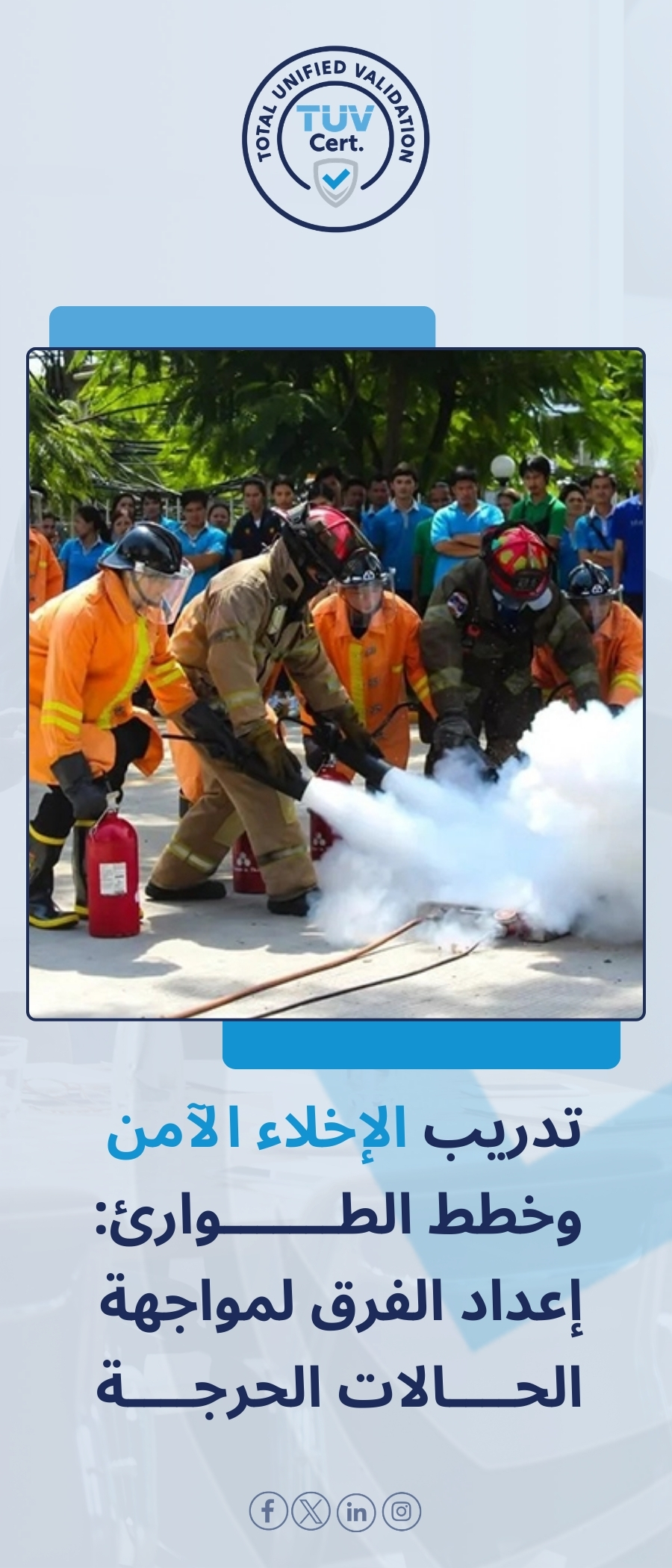
Safe evacuation plans and emergency management form one of the main pillars in building an effective corporate safety system within industrial and commercial facilities. With increasing operational risks and diverse work environments, relying on traditional procedures is no longer sufficient to ensure the protection of employees and assets. It has become essential to adopt specialized training programs that combine theoretical knowledge with practical application. This highlights the importance of safe evacuation training and emergency plans in industrial facilities, as they are key elements in occupational risk management and in promoting a safety culture within organizations.
Modern institutions today rely on integrated systems that include ISO training in Saudi Arabia and professional safety courses to ensure compliance with international standards and enhance the readiness of teams to handle various emergency scenarios. Professional programs such as first aid training for companies and heavy equipment operation training help reduce the likelihood of accidents and enable employees to respond efficiently and quickly in critical situations. Integrating emergency management with occupational safety training and emergency evacuation plans ensures a safer and more stable work environment while maintaining operational continuity.
In this context, specialized training and inspection organizations play a pivotal role in supporting institutions to implement best global safety practices. Total Unified Validation (TUV) provides comprehensive programs in ISO training in Saudi Arabia and professional safety courses, along with advanced programs in heavy equipment operation and first aid training for companies, helping institutions enhance readiness and emergency response according to accredited professional standards.
Investing in safe evacuation and emergency management training is not only about regulatory compliance but is also a strategic step to strengthen a prevention-oriented workplace culture. When these programs are implemented in conjunction with ISO training in Saudi Arabia, professional safety courses, first aid training for companies, and heavy equipment operation training, organizations become better equipped to protect their workforce, minimize potential losses, and improve operational efficiency and business sustainability.
Preparing Emergency Teams through Safe Evacuation and Emergency Plans
Preparing emergency teams within organizations is essential for effective response during incidents or potential disasters, particularly in industrial environments requiring high levels of readiness and discipline. Modern companies rely on specialized programs in safe evacuation and emergency planning to train employees to manage various emergency scenarios in an organized and prompt manner. Integrating these programs with ISO training in Saudi Arabia ensures compliance with international safety standards, enabling teams to protect lives and assets. In this context, TUV provides integrated training programs supporting institutions in developing advanced emergency management systems and promoting a strong safety culture.
1. Building Core Competence of Emergency Teams
Team preparation starts with training programs focused on developing essential emergency response skills, linked to ISO training in Saudi Arabia and international safety standards. This stage includes:
-
Training on safe evacuation procedures during emergencies in factories and facilities
-
Educating employees on occupational risk management and accident prevention
-
Implementing first aid training for companies to ensure immediate response to injuries
-
Raising awareness about equipment and machinery safety procedures
-
Integrating these programs into professional safety courses for continuity and skill development
2. Integration of Training and Operational Safety
Preparing emergency teams is not limited to theoretical training; it also involves linking training to daily operational activities, enhancing the ability to handle real-world risks. This is achieved through:
-
Incorporating heavy equipment operation training into safety plans to reduce operational errors
-
Organizing field drills simulating industrial accident scenarios
-
Developing clear and well-defined evacuation routes within facilities
-
Training employees on effective communication during emergencies
-
Aligning training programs with ISO training in Saudi Arabia to ensure standards compliance
3. Promoting Corporate Safety Culture
The goal of preparing emergency teams extends beyond responding to incidents to building a proactive organizational culture. Key steps include:
-
Integrating first aid training programs into annual safety plans
-
Providing continuous development through professional safety courses
-
Enhancing collaboration between emergency teams and operations/maintenance departments
-
Raising awareness of occupational safety importance in industrial facilities
-
Periodically updating emergency plans based on best global practices
4. Role of Accredited Training in Enhancing Readiness
Implementing training programs through a specialized organization such as TUV ensures high-quality content and effectiveness in improving readiness. These programs combine theory and practical application, covering ISO training in Saudi Arabia, professional safety courses, heavy equipment operation, and first aid training for companies, ensuring emergency teams are professionally prepared to handle challenges.
Investing in emergency team training is a strategic move for any organization aiming to protect its workforce and maintain operational continuity. The more integrated the training programs are, especially when combining ISO training in Saudi Arabia, professional safety courses, first aid training, and heavy equipment operation, the better prepared institutions are for potential risks. Partnering with specialized organizations such as TUV enables the development of advanced emergency management systems that enhance safety and operational sustainability.
Implementing Safe Evacuation Training and Emergency Plans in the Workplace
Implementing safe evacuation and emergency plan programs in the workplace is a strategic step to improve readiness and reduce potential risks in industrial and commercial facilities. Having a clear plan and precise implementation methodology allows institutions to handle emergencies efficiently while protecting employees and assets. Integrating these steps with ISO training in Saudi Arabia ensures alignment with international standards, creating a more professional and comprehensive safety system.
1. Risk Analysis and Workplace Assessment
-
Identifying hazards within the facility
-
Studying available evacuation routes
-
Assessing emergency team readiness
-
Linking results to professional safety courses
-
Including first aid training in the assessment
2. Developing Clear, Written Evacuation Plans
-
Determining safe assembly points
-
Assigning roles and responsibilities among staff
-
Creating clear, easy-to-understand instructions
-
Periodically reviewing the plan according to ISO training in Saudi Arabia requirements
-
Ensuring compliance with corporate safety standards
3. Team Training and Practical Simulation
-
Organizing regular training sessions
-
Conducting evacuation simulation exercises
-
Integrating heavy equipment operation training to ensure operational safety
-
Enhancing rapid response skills
-
Incorporating professional safety course content into training programs
4. Continuous Evaluation and Improvement
-
Measuring response time during drills
-
Identifying weaknesses in the plan
-
Updating procedures based on results
-
Documenting all implementation stages
-
Developing the safety system in alignment with first aid training
Structured implementation of these steps contributes to a safer and more stable work environment, improving the effectiveness of safe evacuation training. When executed professionally in cooperation with TUV, institutions can ensure plan quality and compliance with best practices, integrating ISO training in Saudi Arabia with emergency plans for operational safety and professional safety course alignment.
Linking heavy equipment operation training with evacuation procedures further enhances readiness, particularly in industrial environments requiring precise and rapid responses. Incorporating first aid training reduces injury impacts and ensures immediate treatment before professional medical assistance arrives.
Following these steps in a structured manner with a specialized organization like TUV strengthens institutional readiness, embeds a safety culture, and supports operational sustainability, integrating ISO training in Saudi Arabia, professional safety courses, heavy equipment operation, and first aid training in a professional and organized approach.
The Relationship Between Safe Evacuation, Emergency Plans, and Risk Reduction
The relationship between safe evacuation, emergency plans, and risk reduction is direct and fundamental in any successful corporate safety system. Clear and practically applied evacuation plans reduce the likelihood of human or material losses during emergencies. Integrating these plans with ISO training in Saudi Arabia strengthens adherence to international standards, making risk management more organized and effective.
Professional safety courses raise preventive awareness among employees, while first aid training enhances immediate response to injuries, mitigating their impact. Heavy equipment operation training linked to evacuation procedures minimizes equipment-related accidents, especially in high-risk industrial environments.
Key Outcomes:
-
Reducing Response Time During Emergencies
-
Establishing clear and defined evacuation routes
-
Training staff for organized movement during incidents
-
Integrating first aid skills into emergency plans
-
Conducting regular simulation exercises
-
Linking results to professional safety courses
-
-
Preventing Escalation of Workplace Risks
-
Identifying workplace hazards in advance
-
Updating emergency plans based on safety assessments
-
Reducing chaos during incidents
-
Enhancing preventive awareness through ISO training in Saudi Arabia
-
Integrating safe operations with heavy equipment training
-
-
Promoting a Safety Culture and Organizational Preparedness
-
Engaging all employees in evacuation programs
-
Documenting procedures within internal safety policies
-
Periodically reviewing plans
-
Improving coordination across departments
-
Including first aid training in the annual strategy
-
TUV plays a key role as a specialized body supporting institutions in professional safety program development. Implementing safe evacuation training within an organized framework and in collaboration with TUV enhances the effectiveness of professional safety courses and ensures alignment with ISO training in Saudi Arabia, increasing readiness and reducing operational risks.
Designing Response Plans through Safe Evacuation and Emergency Plans
Designing response plans in industrial facilities through safe evacuation and emergency training ensures full readiness to handle potential incidents. A well-planned, risk-based approach minimizes human and material losses while enabling rapid and efficient responses. Integrating these plans with ISO training in Saudi Arabia supports international compliance and creates a sustainable, comprehensive safety system.
Steps for Designing Response Plans:
-
Risk Analysis as a Foundation
-
Identifying potential scenarios within the facility
-
Assessing weaknesses in evacuation routes
-
Integrating analysis results into professional safety courses
-
Aligning plans with ISO training in Saudi Arabia
-
Periodically updating assessments based on operational changes
-
-
Developing Clear Response Procedures
-
Defining step-by-step evacuation actions
-
Assigning responsibilities to emergency teams
-
Including first aid training procedures in the plan
-
Establishing quick and effective internal communication
-
Ensuring staff readiness through applied programs
-
-
Integration with Operational Activities
-
Linking emergency plans with heavy equipment training activities
-
Reducing accident likelihood during operations
-
Enhancing discipline in industrial work areas
-
Organizing realistic simulation drills to test plans
-
Improving institutional readiness practically
-
-
Continuous Evaluation and Improvement
-
Measuring response plan efficiency
-
Reviewing evacuation times during drills
-
Analyzing results to identify improvements
-
Updating procedures according to best practices
-
Incorporating ongoing development into ISO training in Saudi Arabia
-
Professional collaboration with TUV ensures institutions develop safe evacuation and emergency plans aligned with professional safety courses and ISO training requirements, establishing an effective and actionable emergency response system. Including first aid training within response plans improves immediate injury management, while heavy equipment training reduces operational risks. Implementing these plans professionally with TUV strengthens the safety system and directly links emergency planning to risk reduction.
In conclusion, designing response plans through safe evacuation and emergency training is a strategic step toward a secure workplace, especially when integrated with ISO training in Saudi Arabia, professional safety courses, first aid training, and heavy equipment operation training, applying TUV’s professional methodology to achieve optimal readiness and sustainable operational risk reduction.
A comprehensive system for safe evacuation and emergency plans is no longer optional; it is essential for enhancing safety, minimizing operational risks, and ensuring business continuity. Clear, professionally designed response plans increase the organization’s ability to manage emergencies efficiently, reduce human and material losses, and integrate ISO training in Saudi Arabia with global standards.
Integrating professional safety courses and first aid training boosts team readiness, ensures faster and more precise emergency response, especially when linked to practical measures like heavy equipment training, reducing risks in high-hazard operations. Safety becomes a core part of the corporate culture, not just written instructions, reflected in daily practices, overall performance, and workplace security.
Partnering with a specialized organization like TUV ensures professional program implementation, enhancing evacuation and emergency response plans in a practical, organized manner. Collaboration with TUV guarantees alignment with ISO training in Saudi Arabia, strengthens professional safety courses, and integrates first aid and heavy equipment training into a unified framework aimed at risk reduction and improved institutional readiness.
Organizations seeking to improve safety, accelerate emergency response, and comply with standards should adopt well-structured evacuation plans and professional training programs in partnership with TUV. Begin today to develop your safety system and make safe evacuation and emergency plans a permanent part of your corporate strategy for a safer, sustainable, and reliable workplace.